

Essentials of the Business Loan Agreement
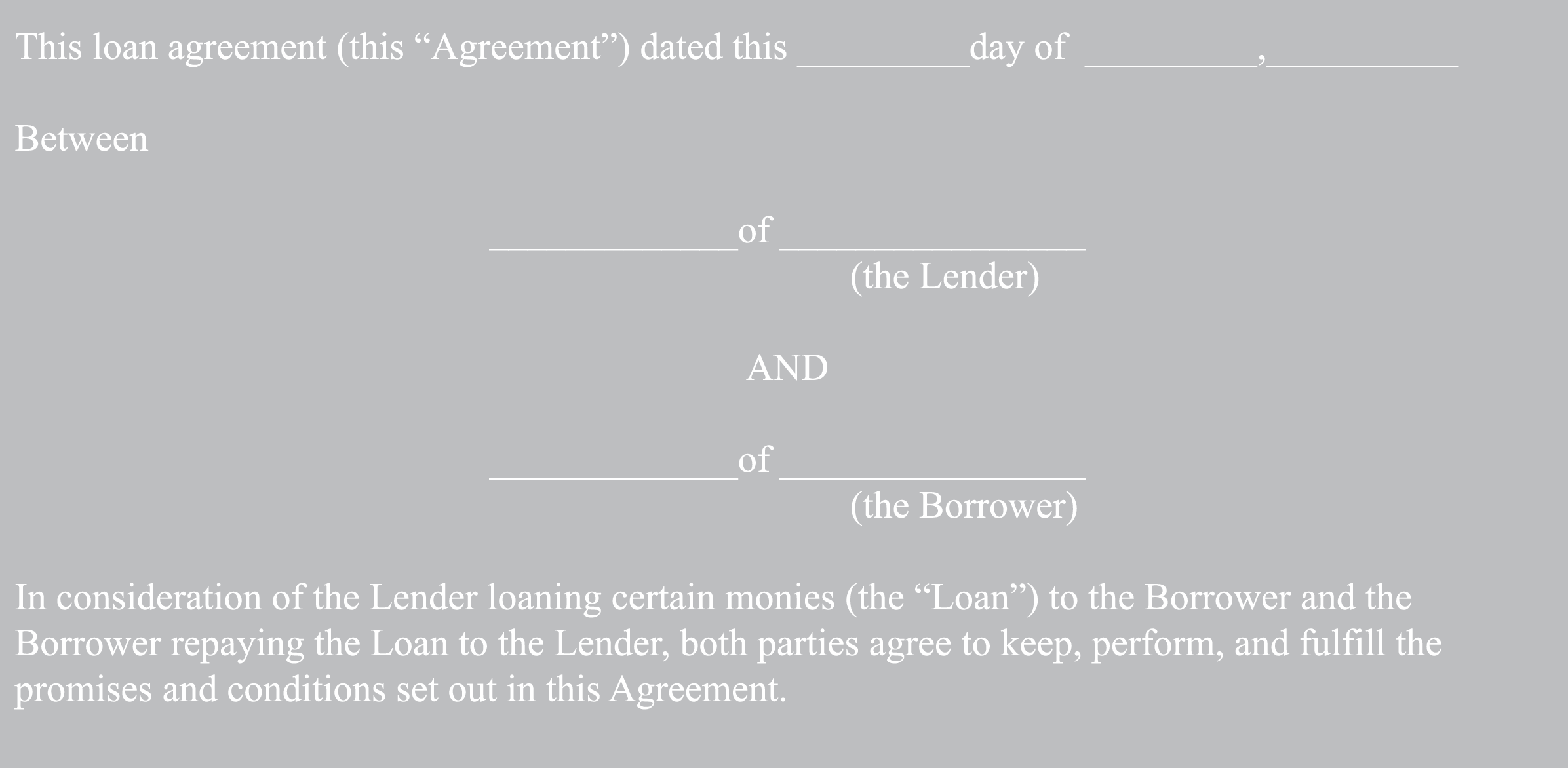
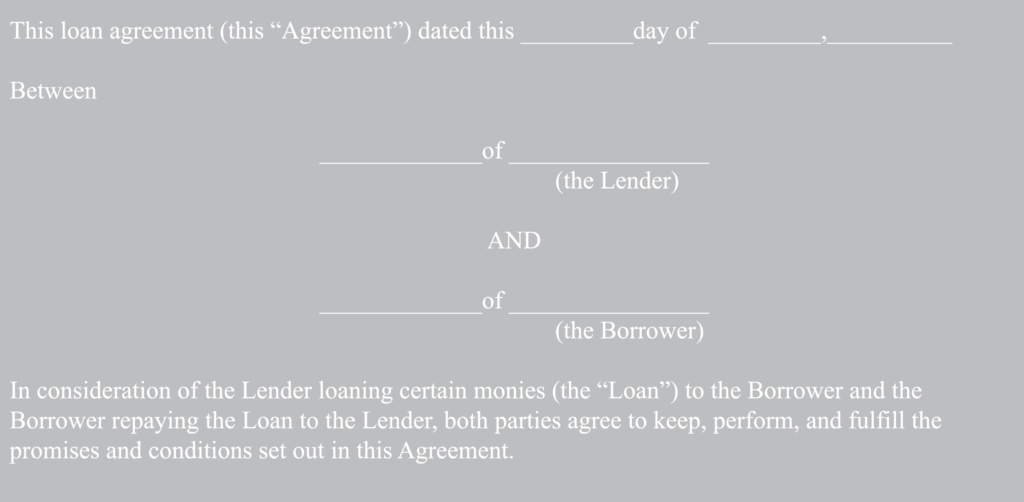
A business loan agreement is a legally binding contract between a lender and a borrower. Under this agreement, the lender provides money or other value, and the borrower agrees to repay the loan according to specified terms. To protect the lender, the borrower, often a corporation, typically provides security or collateral to ensure repayment.
A well-drafted business loan agreement reduces uncertainty, allocates risk clearly, and helps prevent costly disputes if financial difficulties arise.
Who Are the Parties in a Business Loan Agreement?
The Lender
The Lender is the individual or corporation that provides something of value, such as money, property, or services, to the borrower, with the expectation of repayment at a future date.
The Borrower
The Borrower is the individual or corporation that receives value from the lender and agrees to repay the principal amount, together with any interest and fees, under the agreed terms.
When Is a Business Loan Agreement Required?
A business loan agreement is commonly required when a business is:
- Starting operations
- Purchasing commercial property
- Acquiring equipment or vehicles
- Financing inventory or operating expenses
The agreement sets out the loan amount, interest rate, repayment terms, and payment schedule so that both parties clearly understand their obligations.
Related service: Business Financing and Commercial Lending
Key Elements of a Business Loan Agreement
1. Opening Provisions
The agreement begins by identifying the lender and borrower, including their legal names and addresses. It outlines the general obligations of each party and specifies the date on which loan funds will be advanced.
If there is a co-signer or guarantor, for example, someone providing collateral or a personal guarantee, this party is also described in this section.
2. Loan Amount and Interest
Before signing, lenders must disclose the annual percentage rate (APR). Borrowers should understand:
- The total interest payable over the life of the loan
- Any fees or additional charges
- Other costs, such as loan or mortgage insurance
The agreement should also explain how interest is calculated. Many loans use the remaining balance method, meaning interest is charged only on the outstanding principal.
3. Payment Dates and Repayment Terms
This section specifies:
- When payments are due
- The frequency of payments
- How payments are applied to interest and principal
Clear repayment terms help avoid misunderstandings and missed payments.
4. Defaults and Penalties
If either party fails to meet its obligations, the agreement may be in default. For borrower defaults, the agreement typically outlines:
- Grace periods after a missed payment
- Late payment penalties
- Default interest rates
Many agreements also include an acceleration clause, allowing the lender to demand immediate repayment of the full loan balance.
5. Governing Law
Business loan agreements are governed by provincial law, which varies across Canada. In Ontario, commercial lending arrangements are subject to provincial statutes and common law principles. The agreement should clearly state which province’s laws apply commonly Ontario for Ontario-based businesses. For more information on Ontario business regulations, see the Ontario Business Registry.
6. Costs and Expenses
Borrowers are often required to cover certain costs, including:
- Legal fees
- Registration or discharge fees for security
- Collection or enforcement costs if the loan goes into default
The borrower may also represent that any collateral provided is in good standing.
7. Representations of the Borrower
The borrower must confirm that key statements about the business are true, including assurances that:
- The business is legally permitted to operate in the province
- All required tax returns have been filed and taxes paid
- No undisclosed liens or lawsuits exist
- Financial statements are accurate and complete
These representations help the lender assess risk.
8. Covenants
Covenants are ongoing promises made by the borrower and, in some cases, the lender. Common covenants include:
- Maintaining adequate insurance over secured assets
- Obtaining life insurance naming the lender as beneficiary
- Restrictions on taking additional debt or changing management
- Providing periodic financial statements, especially for larger loans or start-ups
Failure to comply with covenants may trigger default.
9. Binding Effect
Most agreements include a clause stating that the loan remains binding on the borrower’s heirs, successors, and assigns. This ensures the loan remains enforceable even if the borrower dies or becomes incapacitated.
10. Amendments
This clause explains how the agreement can be modified, typically requiring written consent from both parties.
11. Severability
A severability clause (sometimes referred to as salvatorius) ensures that if one provision of the agreement is found unenforceable, the remaining provisions continue in effect.
Why Legal Review Matters
Although free templates are readily available online, no two business loans are identical. Terms are negotiable, and poorly drafted agreements can expose both lenders and borrowers to unnecessary risk.
A business loan agreement lawyer can ensure that:
For businesses seeking broader corporate legal support, learn more about our Business Law Services.
- Security and guarantees are properly structured
- Covenants reflect the realities of the business
- The agreement is enforceable under Ontario law
You work hard for your money. We work hard to help you keep it.
If you are entering into a business loan, contact Kalfa Law Firm to have your business loan agreement drafted or reviewed to ensure it is viable, enforceable, and aligned with your business goals. You may also find guidance from the Government of Canada – Business Financing resources helpful when planning your funding strategy.
FAQs:
-Shira Kalfa, BA, JD, Partner and Founder
Shira Kalfa is the founding partner of Kalfa Law Firm. Shira’s practice is focused in corporate-commercial and tax law including corporate reorganizations, corporate restructuring, mergers and acquisitions, commercial financing, secured lending and transactional law. Shira graduated from York University achieving the highest academic accolade of Summa Cum Laude in 2012. She graduated from Western Law in 2015, with a specialization in business law. Shira is licensed to practice by the Law Society of Ontario. She is also a member of the Ontario Bar Association, the Canadian Tax Foundation, Women’s Law Association of Ontario, and the Toronto Jewish Law Society.
© Kalfa Law 2020. Updated July 2026
The above provides information of a general nature only. This does not constitute legal advice. All transactions or circumstances vary, and specified legal advice is required to meet your particular needs. If you have a legal question you should consult with a lawyer.